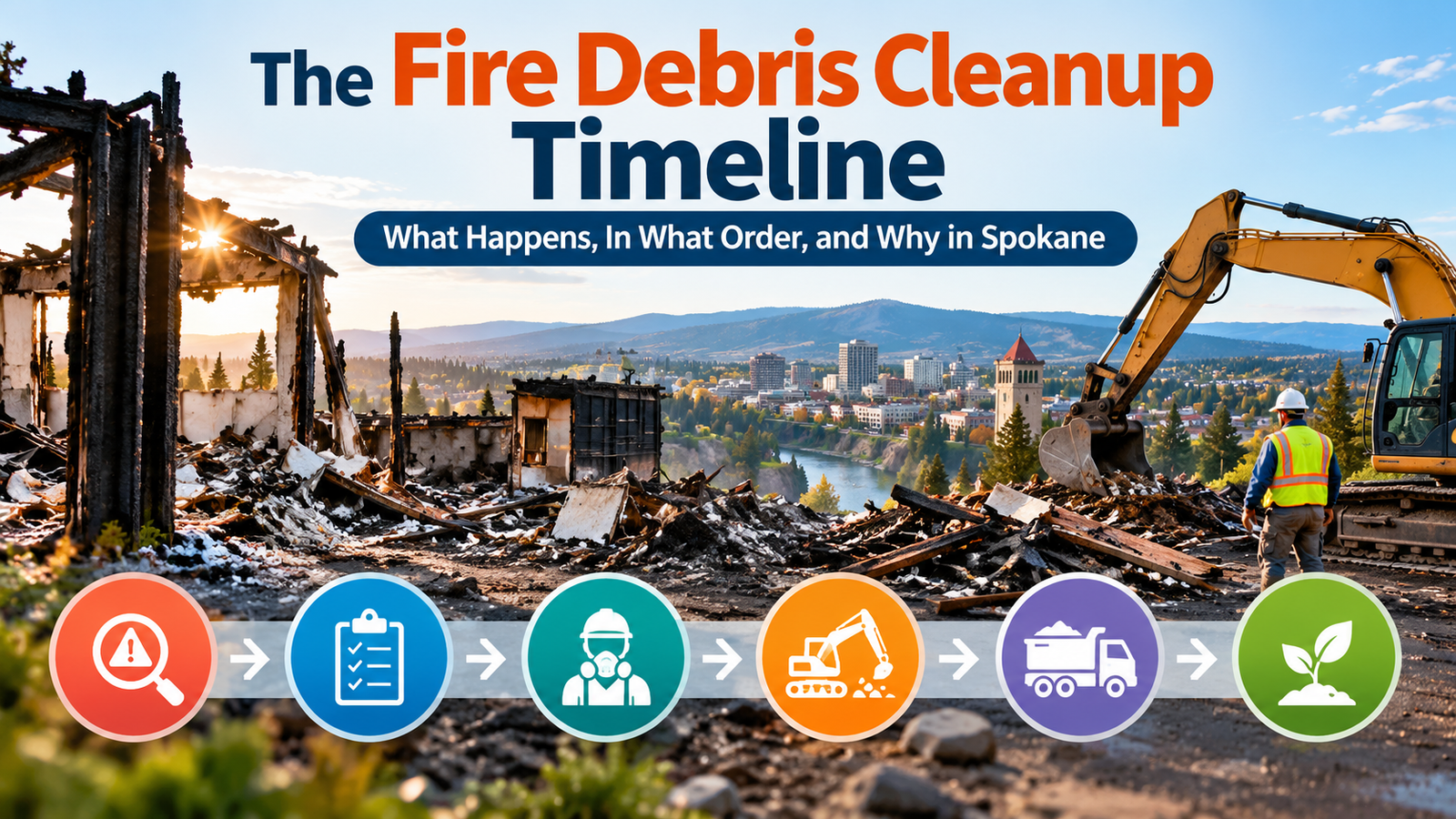
When people think about the aftermath of a fire, they tend to picture the fire itself and then, a long way off, the rebuilt home. The middle part, the weeks and months of assessment, clearing, and preparation, is much less visible. Yet that middle stretch has its own logic and sequence. Steps must happen in a certain order because each one depends on the one before it, and rushing or reversing them can create safety, legal, or practical problems.
This article lays out the timeline of Fire Debris Cleanup Timeline Spokane in general terms. It covers the phases from the first day after a fire to the point at which a site is ready for rebuilding or other use, explains why each phase exists, and describes how the sequence can stretch or compress depending on the circumstances. The setting is Spokane, Washington, with its cold winters, dry summers, mix of older and newer homes, and local agencies. The timeline is a general framework. Actual schedules depend on the size of the loss, the involvement of investigators and insurers, weather, and regulatory requirements, so no fixed durations should be taken as promises.
Why Debris Cleanup Is Not a Single Step
Fire debris is not ordinary trash. It is a mixture of burned building materials, contents, ash, water soaked residue, and potentially hazardous substances. Several overlapping needs shape how it is handled.
Evidence and investigation. The site may need to remain undisturbed until the cause of the fire is determined.
Insurance documentation. Insurers typically want to see and document damage before it is removed.
Safety. Unstable structures, sharp debris, and contaminants make the site hazardous.
Regulation. Hazardous materials such as asbestos require specific procedures. Disposal is governed by rules about where different waste types can go.
Environmental protection. Ash and runoff can carry contaminants into soil and water.
Neighbors and community. Dust, noise, and debris affect surrounding properties.
Because of these needs, cleanup is staged rather than immediate.
Phase One: The First Day to the First Week
Securing the Scene
After firefighters have extinguished the fire and checked for hot spots, attention turns to preventing further harm.
- Utilities are shut off.
- The structure is evaluated for immediate hazards.
- Openings may be boarded and temporary fencing placed to keep people out.
- The property is typically posted with notices restricting entry.
- Fire investigators may examine the site to determine cause and origin.
Notifications and Documentation
- The property owner notifies the insurance provider.
- Photographs and notes are collected.
- Adjusters visit to assess the loss.
- Official reports from the fire department become available.
Temporary Protection
Tarps may cover roof openings, and standing water may be pumped to limit further damage. In winter, steps may be taken to prevent freezing of pipes and drainage systems.
This initial period is usually about safety and information, not removal.
Phase Two: Release of the Scene and Assessment (Days to Weeks)
Once investigators have finished, the site is released, and evaluation can proceed.
Structural evaluation. Engineers or building officials determine whether the structure can be stabilized, repaired, or must come down.
Hazardous materials survey. In older buildings, testing for asbestos in materials such as siding, flooring, insulation, and roofing is a standard step, and similar checks may look at lead based paint. Results shape the cleanup plan.
Contents inventory and salvage. Owners and restoration professionals may identify items that can be cleaned or recovered. Some belongings are removed before heavier work begins.
Scope determination. The extent of damage and the choice between restoration and demolition frame everything that follows.
Insurance review. Adjusters and policy terms influence the sequence and approvals.
This phase can be quick for a small fire with clear damage, or long where investigations, disagreements, or complex building conditions are involved.
Phase Three: Permits and Planning
Before heavy work starts, paperwork and planning come into play.
- Demolition or cleanup permits. Local jurisdictions typically require permits for demolition and, in some cases, for significant debris removal.
- Hazardous material notifications. Where asbestos is present or suspected, notification to regulatory agencies is typically required before work. In the Spokane area, regional air quality authorities have historically administered asbestos related notification requirements, and state labor and environmental agencies also play roles, so current rules should be confirmed directly.
- Utility coordination. Service lines are formally disconnected and capped.
- Site plans. Staging areas, access routes, dumpster locations, and protective measures for neighbors are mapped.
- Waste planning. Different materials are routed to different facilities, depending on their type and rules.
- Schedule coordination. Weather windows, crew availability, and agency timelines are balanced.
Permit timing can be a major factor in the overall schedule, since agencies have their own processing periods.
Phase Four: Hazardous Material Abatement
If regulated materials are present, they are removed before general demolition or debris clearing.
Asbestos abatement. Trained and certified personnel remove asbestos containing materials using containment, wetting methods, and protective equipment. Material is bagged, labeled, and delivered to approved disposal sites.
Lead and other hazards. Handling follows applicable rules and often involves dust control and special disposal.
Fuel, chemicals, and appliances. Propane tanks, paints, solvents, batteries, and refrigerants are removed and handled separately.
Verification. Inspections or clearance sampling may be used to confirm that abatement is complete.
This phase protects workers, neighbors, and the environment, and it is not optional where regulations apply.
Phase Five: Demolition or Selective Removal
Next, the damaged structure is dealt with.
Full demolition. When the building cannot be saved, machinery brings it down in a planned sequence. Water spraying controls dust, and material is sorted as it is removed.
Selective demolition. Where portions of the structure are retained, damaged areas are carefully removed so that sound parts are protected.
Foundation work. Depending on its condition and future plans, a foundation is either preserved, partially removed, or fully removed. Basements and crawl spaces are handled in line with local requirements, including proper backfilling or capping to avoid hazards.
Safety measures. Fencing, signage, and monitoring protect the public during this stage.
Depending on the size of the structure, active demolition often takes days rather than weeks, though preparation takes longer.
Phase Six: Debris Removal and Sorting
After the structure is down, the large task of clearing begins.
- Gross debris removal. Large pieces of framing, roofing, and other materials are loaded into trucks or containers.
- Sorting. Metals, concrete, clean wood, and mixed debris are separated where possible. Sorting enables recycling and proper disposal.
- Ash and fine debris. Ash and burned residue often contain contaminants and are handled with care, sometimes requiring special disposal.
- Contents removal. Remnants of belongings and appliances are cleared.
- Transport. Loads travel to landfills, transfer stations, or recycling facilities that accept each type.
- Documentation. Weight tickets and records help confirm proper disposal.
Recycling potential varies. Metals and clean concrete are commonly recoverable, while heavily burned wood and mixed debris are typically landfilled.
Phase Seven: Soil and Site Assessment
Fire affects the ground as well as the building.
- Surface soil. Ash and contaminants may have settled into the topsoil.
- Contamination testing. In some cases, soil sampling checks for metals, petroleum, and other substances, especially where chemicals were stored or the fire was large.
- Utility trenches and drains. These may carry debris or water to unexpected places.
- Trees and vegetation. Fire damaged trees may need evaluation, and some are removed for safety.
- Drainage. The site’s water flow is examined to avoid erosion and runoff problems.
If contamination is found, further removal or treatment may be required before the site can be reused.
Phase Eight: Site Restoration and Stabilization
The final cleanup step is to leave the property in a safe and stable condition.
- Grading. The area is leveled and shaped to drain properly.
- Erosion control. Silt fencing, straw, seed, or other measures hold soil in place.
- Fence and hazard removal. Temporary barriers may come down once the site is safe, or may remain until construction begins.
- Final inspections. Local authorities may check that required steps are complete.
- Closeout documents. Records of permits, disposal, and clearances are assembled for owners, insurers, and later builders.
At this point, the property is generally ready for rebuilding, sale, or other planned use.
How Long Does It All Take?
Because every fire is different, any time estimate is only a rough framework. Some general patterns can be described without specific promises.
- Small, contained fires with simple structures may move through the phases quickly.
- Large losses, complicated investigations, or hazardous materials extend the schedule.
- Permit processing and agency notification periods can add waiting time.
- Insurance review and approvals influence the pace.
- Weather affects what can be done and when, especially in cold or wet seasons.
- Demand for contractors and disposal capacity in the area may matter after widespread events.
It is common for the preparation and approval phases to take longer than the physical work of demolition and removal.
Seasonal Aspects in Spokane
Spokane’s climate adds specific timing considerations.
Winter. Freezing temperatures, snow, and frozen ground complicate demolition, dust control, and soil work. Snow can conceal hazards and add weight to damaged structures. Protective measures are sometimes needed so that exposed pipes and foundations do not suffer further damage.
Spring. Thaw and rain increase runoff and soft ground, putting emphasis on erosion control.
Summer. Dry weather offers good working conditions, but dust control is important, and fire restrictions may limit certain activities. Wildfire smoke can influence outdoor work schedules.
Fall. Cooler, drier weather is often favorable, though shortening days and early frost approach.
Because of these swings, planning often looks ahead to the weather windows that will allow a safe and effective sequence.
Environmental and Community Considerations
Cleanup has effects beyond the property line.
Dust and air quality. Controlling dust protects neighbors and workers. Spokane has experienced air quality concerns from wildfire smoke, which makes careful dust management especially relevant.
Stormwater. Ash and sediment can wash into storm drains. Containment measures limit this.
Noise and traffic. Equipment and trucks add temporary disturbance.
Waste diversion. Recycling reduces the volume sent to landfills.
Neighborhood communication. Informing neighbors about schedules and safety measures reduces friction.
Records and Documentation Throughout
Good record keeping is a thread that runs through every phase. Useful documents include the fire department report, insurance claim records, photographs, hazardous material survey results, permits, disposal receipts, and clearance documents. They help with insurance, legal matters, future construction, and any later questions about the site.
Common Misunderstandings
“Debris can be cleared right away.” Investigation, insurance review, and hazardous material checks usually come first.
“All fire debris is ordinary waste.” Some materials require special handling and disposal.
“Cleanup is just demolition.” Demolition is one stage of a longer sequence that also includes assessment, abatement, sorting, and site restoration.
“Once the structure is gone, the site is ready.” Soil, drainage, and foundation questions remain.
“The timeline is the same for every fire.” Size, complexity, hazards, and weather make every project different.
Frequently Asked Questions
How soon after a fire can debris be removed?
Not until investigators release the scene and necessary assessments and approvals are complete. The wait varies with the circumstances.
Why is asbestos testing needed before cleanup?
Many older buildings contain asbestos, and fire and demolition can release fibers. Testing identifies whether special removal is required.
What happens to burned materials?
They are sorted and sent to landfills, transfer stations, or recycling facilities according to type and rules.
Does fire debris cleanup involve permits?
Often yes, particularly for demolition and hazardous material work. Requirements depend on the jurisdiction.
Why is the order of steps important?
Evidence, safety, insurance, and regulation depend on sequence. Removing debris too early can erase evidence, spread contamination, or complicate claims.
Is ash hazardous?
It can contain contaminants such as heavy metals and residues from burned materials, so it is handled carefully.
Can the foundation stay after the structure is removed?
Sometimes, depending on its condition and plans for the site. Otherwise it may be removed or filled and capped according to rules.
How does winter affect the timeline?
Cold, snow, and frozen ground can slow work or change methods, and some steps may be postponed to better weather.
What documents should be kept?
Fire reports, insurance records, permits, survey and abatement results, disposal receipts, and final inspection records are all valuable.
Final Thoughts
The path from a burned structure to a cleared site is a sequence with reasons behind every stage. Safety and investigation come first, assessment and permits follow, hazardous materials are addressed before demolition, debris is sorted and removed, and the site is stabilized for whatever comes next. Skipping or reordering steps tends to create problems that are harder to fix later.
For readers who want a clear picture of a fire debris cleanup timeline in Spokane, the main lesson is that patience with the early phases often shortens the overall journey. A site that has been properly documented, tested, permitted, and cleared is a site that can move forward with confidence.